One year on

Twelve months ago I embarked on a journey full of uncertainty. After 23 years in the workforce I decided to stop working and take time out.

There were plenty of naysayers; “You’ll be bored in six months”, “ You’ll miss work too much”. There was also lots of encouragement; “What a fantastic opportunity”, “I’ve always wanted to do what you’re doing”.

Early on I wrote down the goals for my sabbatical and developed a clear plan of what I wanted to achieve. This was partly because this is how I have always operated in the  work environment and I wanted to ensure my time was well used. But, truth be told, it was partly because I felt guilty for taking the time off and I needed to be able to prove to myself and others that I was achieving what I set out to do and not just taking an extended holiday.

As I prepare myself for a return to the workforce (albeit part time) I have spent some time reviewing those goals and reflecting on the past year.

So, did I achieve my goals? Mostly yes. And some no’s.

Did I learn anything about myself? Absolutely.

Habits

After many years of working I discovered I had developed some unhelpful habits; emotional eating, intermittent exercise, dwelling on decisions made, spending Sunday evenings obsessively worrying about what might happen at work the coming week.

During the past 12 months I have consciously spent time on breaking these bad habits and creating new ones.

I now exercise four to five times a week (a mix of yoga, running and swimming and I have recently added kickboxing to try something new). I focus on making healthy eating choices four or five days a week and give myself permission to enjoy a few treats over the weekend while trying not to overindulge. (One or two pieces of chocolate NOT the whole block!) When I am eating socially I try to eat mindfully, stop part way through the meal, wait a few minutes and then ask myself am I eating out of hunger or because of my uncontrolled desire to just to eat everything in sight.

Leo Babauta’s Zen Habits and Marc & Angel’s Hack Life both gave me inspiration and easy to follow tips as I slowly tried to kick habits of a lifetime.

However, I know it could be very easy to go back to these habits once I return to work. For me regular exercise and making healthy choices when eating requires discipline. Which leads me to the next discovery…..

Mental strength

So many of my bad habits were due to not having the mental strength to make the right decision. After spending so much of my time obsessively worrying about past decisions and future scenarios I was too tired to focus on what I needed to do in the present.

Mindfulness is such a buzz word for today. However with the help of tips and meditation practices from Andy Puddicombe’s Headspace, I have come to recognise negative thoughts for exactly what they are “thoughts”.  They are not reality unless I allow them to be. I don’t ignore these thoughts but I acknowledge them for what they are and move on to a more productive route.

Please don’t think I no longer have negative thoughts or concern myself about the past or future. They are still there. At this moment I am worried about how I am going to balance my new found life with work commitments. How am I going to fit in the yoga and running, preparing healthy but delicious meals for my family, writing and pursuing my creative side?

Priorities

This is where Mark Manson’s book The Subtle Art of Not Giving a F*ck has really helped. Mark’s message is not about not caring about anything, his message is to care about those things you value. Saying yes to what matters to you and not wasting time with the rest.

Prioritising what I value most; my physical and emotional health, my family and community. And also finding something that challenges me and stops me becoming too comfortable or complacent in the world.


I have set myself new goals and developed a new plan for the next 12 months, focusing on what I am passionate about, what is meaningful to me. Will I achieve everything I set out to do? Definitely not. But I will ensure I continue to direct my time, energy and passion to what matters the most to me.


(Photo by Delano Balten on Unsplash)

Book Review: The Subtle Art of Not Giving a F*ck by Mark Manson

Our culture today is obsessively focused on unrealistically positive expectations: Be happier. Be healthier. Be the best, better than the rest. Be smarter, richer, sexier, more popular, more productive, more envied, and more admired.

Ironically, this fixation on the positive – on what’s better, what’s superior – only serves to remind us over and over again of what we are not, of what we lack, of what we should have been but failed to be.

I am not a self-help book kind of person. I find them full of glaringly obvious advice, pointless and often counterproductive. I usually get bored before I have read more than a quarter of the book and lose interest.

I am quite comfortable saying that what first drew my attention to The Subtle Art of Not Giving a F*ck was the obvious swear word in the title. However, once I read what it was about I quickly dismissed it as another one of “those” self-help books. But then over the following months the book kept appearing in my life; as a recommended book on my Kindle, a book review by a blogger I follow, then a former colleague posted on Good Reads that he had read it. Clearly something was telling me to read the book.

It did take me a while to read, I kept getting distracted by more interesting books, but I finished it! And I’m reviewing it. So it passed “Is it worth reading?” test.

The Subtle Art of Not Giving a F*ck: A Counterintuitive Approach to Living a Good Life by Mark Manson basically tells you to suck it up and get on with your life. It doesn’t pussy foot around telling you that your life will be a bed of roses as long as you follow some amazing formula for life that the author miraculously discovered.

The problem is that giving too many fucks is bad for your mental health. It causes you to become overly attached to the superficial and fake, to dedicate your life to chasing a mirage of happiness and satisfaction. The key to a good life is not giving a fuck about more; it’s giving a fuck about less, giving a fuck about only what is true and immediate and important.

Yep, the f-word is used a lot. If that upsets you, don’t read the book. But know that by Chapter 2 the f-word is used less and less.

Mark basically says that we are hard-wired to be unhappy. That it is dissatisfaction that keeps us striving, building, evolving – to make things better.

Whatever makes us happy today will no longer make us happy tomorrow, because our biology always needs something more. A fixation on happiness inevitably amounts to a never ending pursuit of “something else” – a new house, a new relationship, another child, another pay rise. And after all our sweat and strain, we end up feeling eerily similar to how we started: inadequate.

Mark tells us some hard truths …. that nothing worthwhile is worth it without working hard, that you are not special or different from anyone else, that you and everyone else suffers, that you will make mistakes … and then you die.

The challenge is to know what to give a f*ck about and focus on that.

The only way to be comfortable with death is to understand and see yourself as something bigger than yourself; to chose values that stretch beyond serving yourself, that are simple and immediate and controllable and tolerant of the chaotic world around you.

Mark believes that “Values underlie everything we are and we do.” And that choosing good values are crucial.

Some examples of good, healthy values: honesty, innovation, vulnerability, standing up for oneself, standing up for others, self-respect, curiosity, charity, humility, creativity.

You’ll notice that good, healthy values are achieved internally. Something like creativity or humility can be experienced right now. You simply have to orient your mind in a certain way to experience it. These values are immediate and controllable and engage you with the world as it is rather than how you wish it were.

Overall I’d say that this book gave me a lot to reflect on as I continue my sabbatical into the second year. (A blog post for another time.)

And the quote which resonated with me most?

In the long run, completing a marathon makes us happier that eating chocolate cake.


The Subtle Art of Not Giving a F*ck: A Counterintuitive Approach to Living a Good Life, Mark Manson, Sydney, Macmillan, 2016, EPUB format 9781925483857


Why I am learning Chinese (Part 2)

For one of my very first blog posts I wrote was about why I am learning Chinese. Last week I had my final lesson for the semester and I thought I would reflect on what I have achieved in the past year.

First up, my goal was to be able to go out for dinner with my Chinese friends and speak with them in their language rather than forcing them to converse in mine. A very ambitious goal! The old adage that the more I learn, the more I realise I know so little, is very true.

However, I am pleased with what I have achieved. I have significantly increased my vocabulary and can even construct simple sentences. It has been frustrating at times but I can see real progression. In fact, I have to say, I have even enjoyed it!

I am thrilled that I am setting a good example for my son. There were times when we were learning the same theme and could quiz each other. He often corrects my pronunciation! And I’d like to think that I even inspired my husband to start learning. Annoyingly he seems to be mastering it quicker than I. (I am trying hard not to be jealous of this.)

Importantly it has improved the connection I have with my Chinese friends. I sense that maybe they feel more respected and valued as a friend. They seem to enjoy explaining the nuances of certain words and phrases and teaching me new ones. What is particularly interesting is when I show off my latest vocabulary and they laugh and tell me that what have just said is not how real people talk, it is the formal way of saying something and then proceed to teach me the vernacular.

Of course I can’t have any real in-depth conversation with them. Our conversation is limited to basic sentences and as soon as they get more complex the language switches to English as I try to explain.

Learning Chinese has led me to understand and appreciate China better. I can appreciate how a language reflects the culture (or is it culture reflected in the language?). For example the Chinese language has many more words to describe a persons family connections e.g. where English only has sister and brother, Chinese describes whether your sister or brother is older or younger than you (jie jie, mei mei, ge ge and di di respectively), whether your grandparents are your father’s parents (ye ye, nai nai) or mother’s parents (wai gong, wai po). And don’t get me started on the variations for aunt, uncle, cousins and in-laws.

chinese-book.jpg

Learning Chinese has helped me to understand English better too. Or at least reflect on my complete lack of understanding of English grammar rules. If someone asked me to explain the use of nouns, determiners, pronouns, verbs, adjectives, adverbs, prepositions and conjunctions in a sentence I would be perplexed. I can’t explain it, I just know it.

Someone once told me that while Chinese is hard to learn, once you know the rules it is  easy as you just follow the rules. This is in comparison with learning English which is full of exceptions to the rule. Not true! Chinese also has many exceptions to the rule. This makes it more frustrating to learn because just when you think you understand the teacher tells you about the exceptions. Arrgh!

Despite this, I intend to continue learning Chinese. Next semester I plan to resume attending class. I also want to arrange a more one on one conversational chat with someone once a week. Now I have the basics I need to work on my confidence and actually start speaking the language.

Book review: Fall Down 7 Times Get Up 8 by Naoki Higashida

A worthwhile existence lies in playing whatever cards life has dealt you as skillfully as you can.

This book, more than any other in a long time, has made a huge impact on me. I read it a few weeks ago and I still regularly pause to consider the messages I have taken from it.

In Fall Down 7 Times Get Up 8: A young man’s voice from the silence of autism, Naoki Higashida shares his thoughts and experiences as a young man living with autism.

Naoki, born in Kimitsu Japan, was diagnosed with severe autism when he was five. Through the support of his mother he learned to communicate using a handmade alphabet grid. He went on to write The Reason I Jump at age 13 and has since published several books, essays and poems.

Naoki

Photo: © Miki Higashida

I am somewhat embarrassed to admit that until I read this book I truly had not given much thought to the lives of people with autism and similar conditions. Naoiki’s story opened my eyes to the experiences, and more importantly, thoughts of people with autism.

Back in the days when I had no way to communicate at all … I was extremely lonely. People who have never experienced this will go through life never knowing how soul-crushing the condition of wordlessness is.

I know that if I was wordless, if I could not speak or write, I would be extremely frustrated. I would want to stomp, scream, hit out and make any noise I could. And when someone asked what was wrong, how could I explain to them the agony of not being able to tell them how I feel?

Through his reflections on life Naoki shares some excellent advice on how to interact with people with disabilities.

One of the lessons I’m grateful to have learned as an adult is that life serves up hard times to everyone, not just me. …. Many people with disabilities are, I think, kept isolated and insulated from society. Please give those of us with special needs opportunities to learn what’s happening in the wider world without deciding on our behalves – by assuming ‘They won’t understand anything’, or ‘Well, they don’t look interested’. On the surface, a sheltered life spent on your favourite activities might look like paradise, but I believe that unless you come into contact with some of the hardships other people endure, your own personal development will be impaired.

Naoki’s words certainly have caused me to reflect on my own preconceptions and attitudes. Perhaps, the focus should change from asking How can people with special needs fit into our society? to How can we embrace our differences and create a society where everyone benefits from these differences?

The value of a person shouldn’t be fixed solely by his or her skills and talents – or lack of them. It’s how you strive to live well that allows others to understand your awesomeness as a human being.


Fall Down 7 Times Get Up 8: A young man’s voice from the silence of autism, Naoki Higashida, translated by KA Yoshida and David Mitchell, New York, Random House, 2017, First edition, ISBN 9780812997392


Finishing the Great Wall marathon

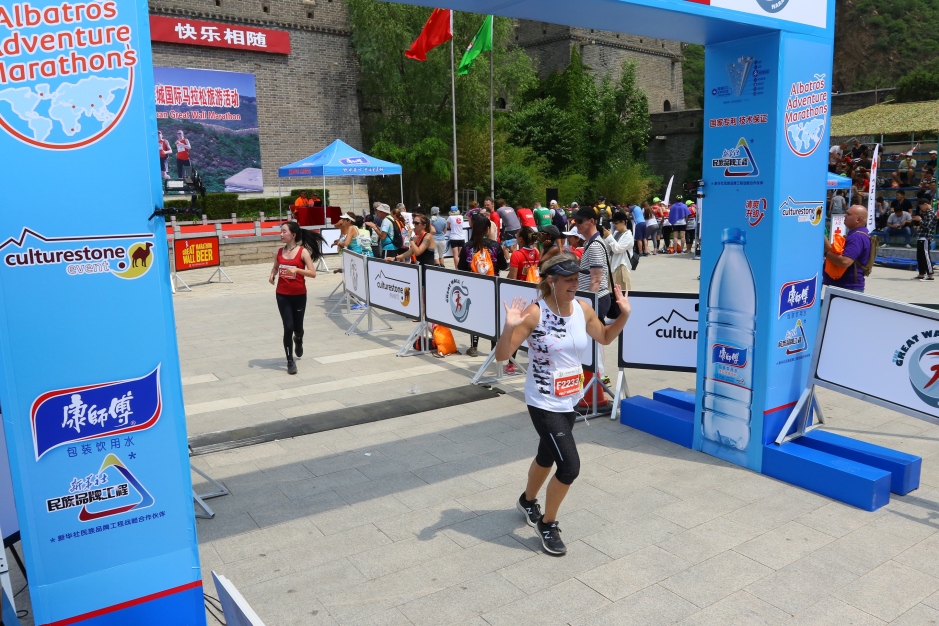
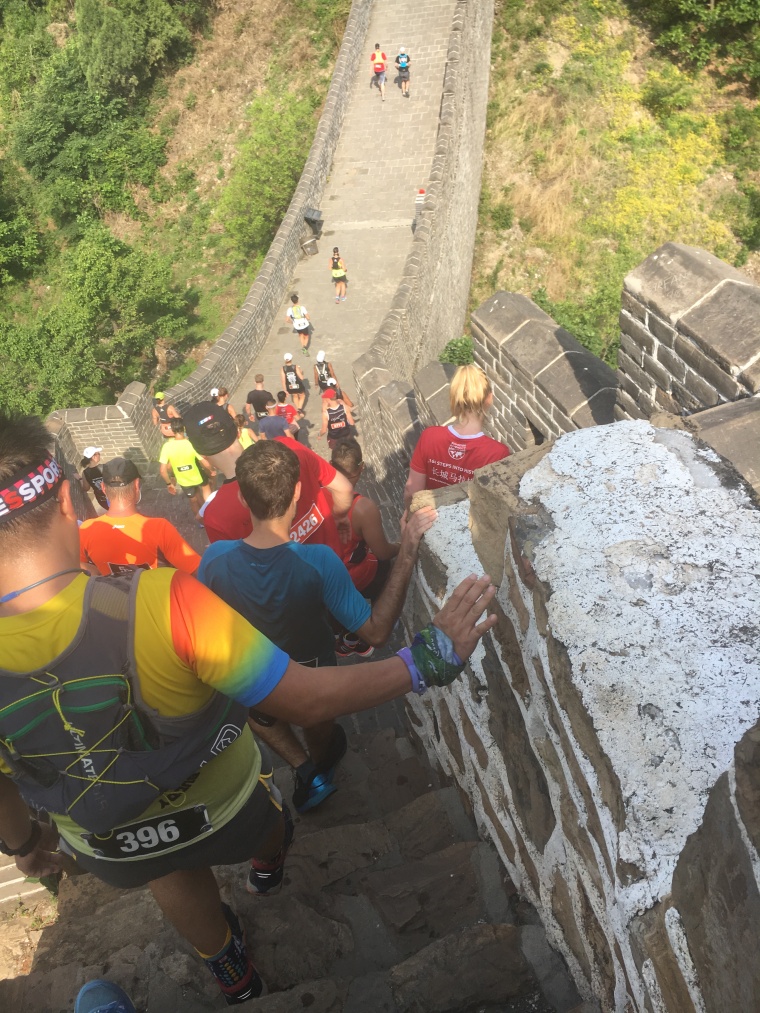
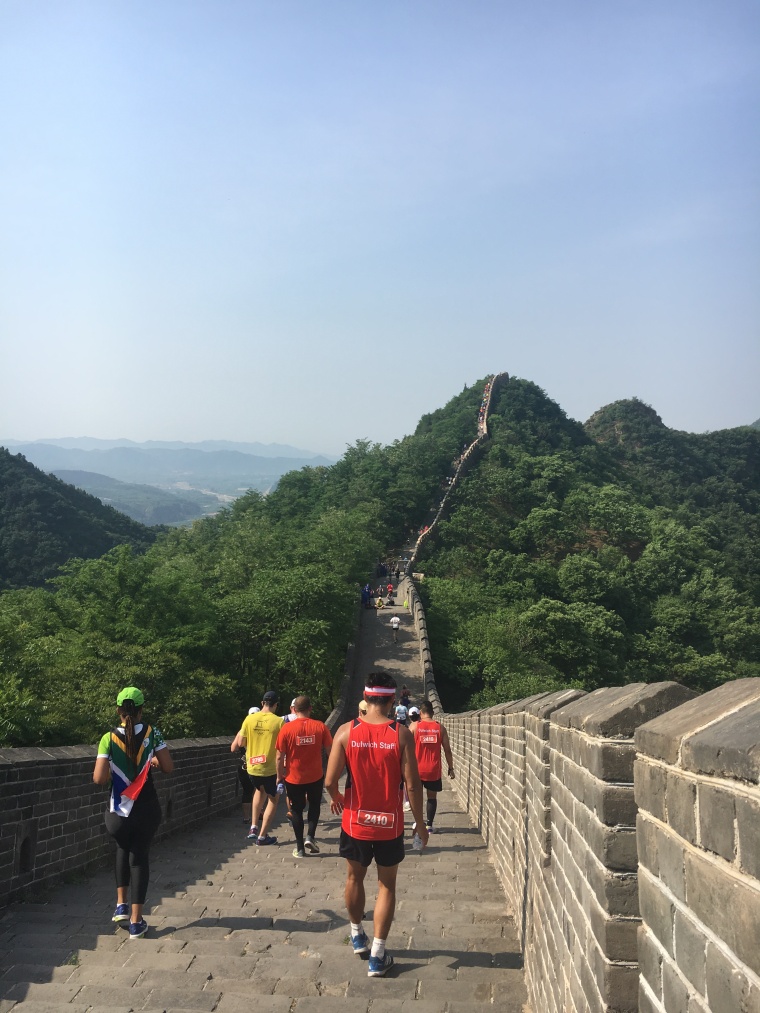
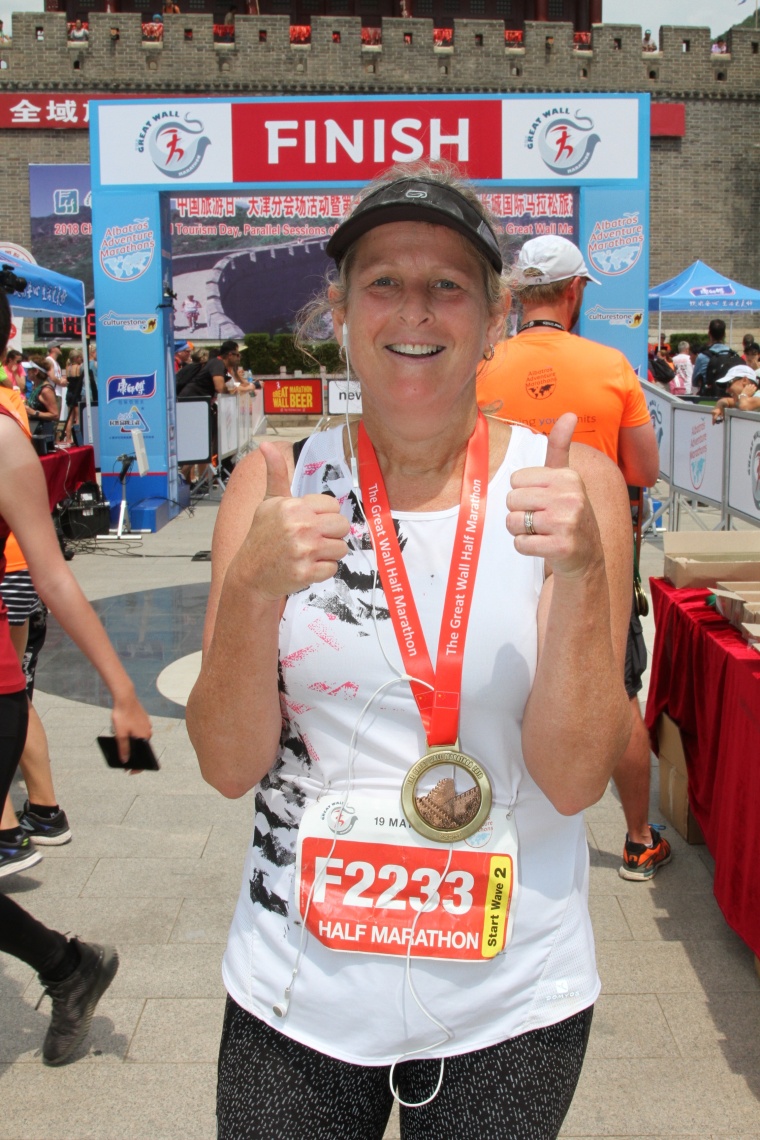
I did it! I ran 21km and completed The Great Wall (half) Marathon! With seven kilometres of stairs there was a lot of walking as well. Particularly one steep section that was more rocks cemented together than actual stairs.

IMG_5374

I feel so gratified by this achievement, the result of more than just one days hard work. I have been training for months. Building up from struggling to run more than 10 minutes to being able to finish a half marathon.

How did I do this? I had help from a couple of apps, Zen Labs Fitness C25K and 13.1 and Headspace,  the support of family and friends, and finding my mental strength (see my previous post on finding my strength).

I have to admit that this strength left me for a big part of the race. All that was going through my mind was “#*@! what the #*@! was I thinking? I’m a #*@! idiot for thinking this was a #*@! good idea.” (#*@! – insert expletives here.) However, I remembered the advice from Headspace’s meditation and pushed these thoughts out and instead focused on a time when I had been training and enjoyed running. It worked! Suddenly I felt free, it became easier to run. Similarly not feeling I had to run the whole time really helped. Drawing from my training with the 13.1 app I knew it would be more achievable if I allowed myself one minute walking then running for as long as I could.

So, what was it like? I compare it to childbirth. People tell you how hard it is but until you experience it for yourself, you don’t really understand what it is like.

  • The worst bit – the stairs, of course. Climbing a million stairs to reach the top and see you have a billion more to go really messes with your mind.

IMG_5373

IMG_5378

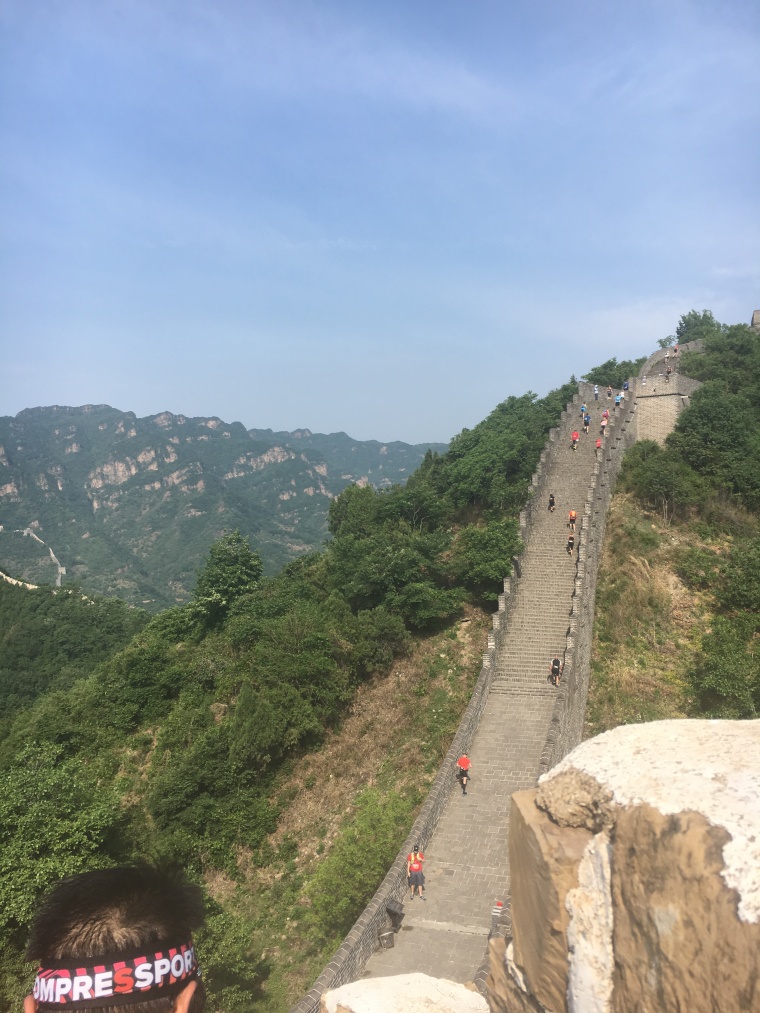
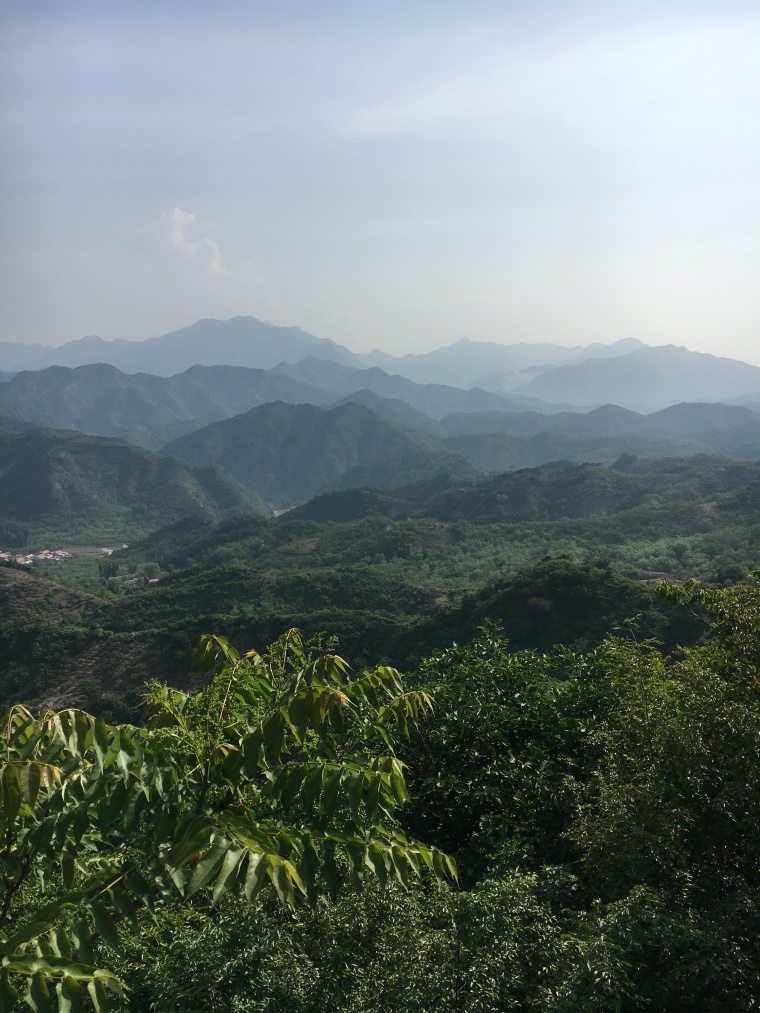
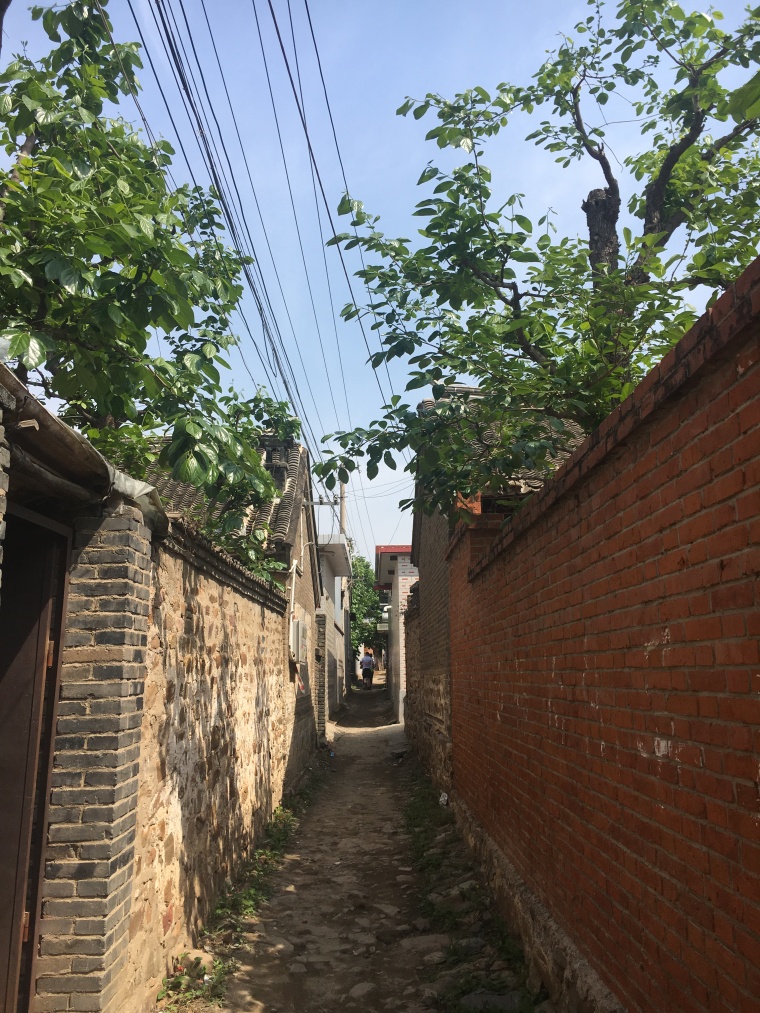
  • The best bit – the amazing views from the top of the stairs. When you have to stop to catch your breath it really helps to be able to look at the stunning scenery. And running through the villages with the locals cheering you on.

IMG_5371

IMG_5381

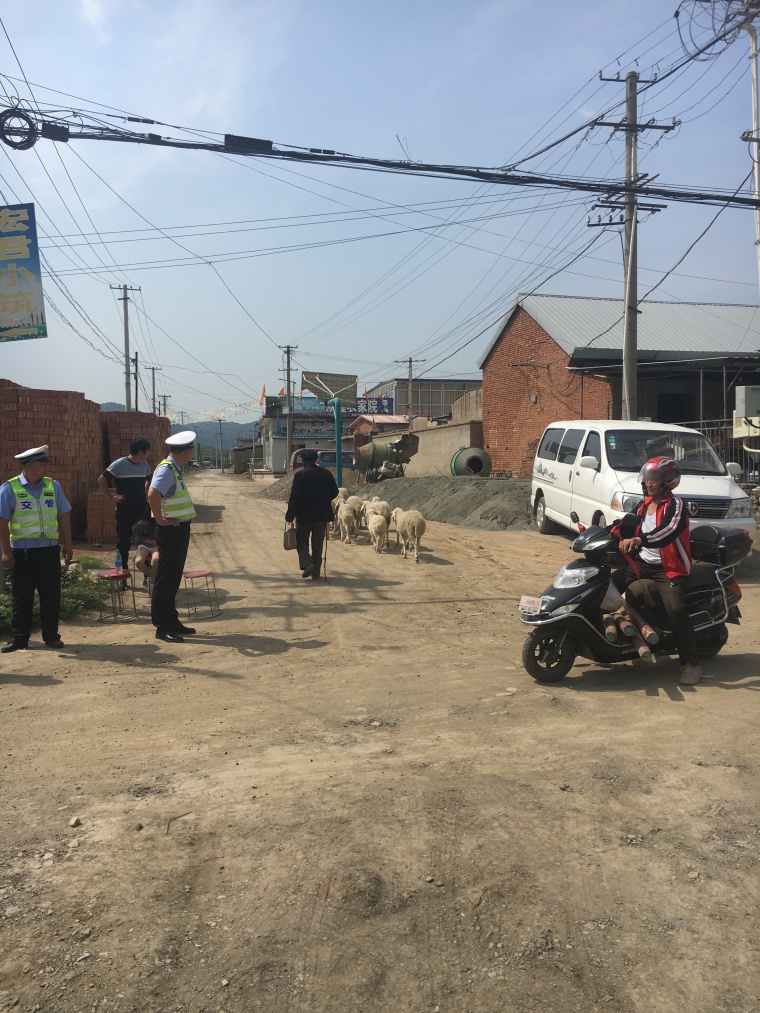
  • The funniest bit – having to stop running to allow a farmer to herd his flock of sheep across your path.

IMG_5379

When I finished the race I was relieved it was over. As I crossed the finish line I vowed never to do it again. However by the morning I was texting my family telling them that we were ALL going to do it next year, my 9 year old son included.

Inspired by two of my friends who completed the marathon (one was the first female to finish, the other completing her first marathon just 20 minutes before the eight hour cut off time), I am seriously contemplating setting my sights on the full marathon.  All 42.1 km of it, including tackling the 7 km of stairs twice!

20x30-GMMC1030


Book Review: Into the Wild by Jon Krakauer

One of his last acts was to take a picture of himself, standing near the bus under the high Alaskan sky, one hand holding his final note toward the camera lens, the other raised in a brave beatific farewell. His face is horribly emaciated, almost skeletal. But if he pitied himself in those last difficult hours – because he was so young, because he was alone, because his body had betrayed him and his will had let him down – it’s not apparent from the photograph. He is smiling in the picture, an there is no mistaking the look in his eyes: Chris McCandless was at peace, serene as a monk gone to God.

Having recently read and reviewed books about solo journeys into the wilderness, I thought I would explore a similar story that did not end so well.

Into the Wild tells the story of Chris McCandless who disappeared into the Alaskan wilderness, four months later his emaciated body was found by hunters. The author, Jon Krakauer, pieces together the years leading to Chris’s death and explores why Chris and many people like him feel compelled to leave civilization behind and to push themselves to extremes.

Understanding Chris’ motivations is much more difficult as he never clearly articulated them (and obviously he’s not around to ask). Jon delves into his reasons by speaking with family, friends, and people Chris met on the two year journey leading to his final trip to Alaska.

I’ve decided that I’m going to live this life for sometime to come. The freedom and simple beauty is too good to pass up. (Written by Chris on a postcard sent to a friend.)

To gain an insight into Chris’ mind Jon explores the experiences and stories of other  adventurers, himself included. He explains why people feel compelled to push themselves to the outer limits and how even the best prepared can find themselves in danger.

It is easy, when you are young, to believe that what you desire is no less than what you deserve, to assume that if you want something badly enough, it is your God-given right to have it. When I decided to go to Alaska that April, like Chris McCandless, I was a raw youth who mistook passion for insight and acted according to an obscure, gap-ridden logic. I thought climbing the Devils Thumb would fix all that was wrong with my life. In the end, of course, it changed almost nothing. But I came to appreciate that mountains make poor receptacles for dreams. And I lived to tell my tale.

These people journey into the wild alone because they are adventurers, physical extremists, escapees from society, romantics. They all have similarities, they are all different. They all have their reasons, sometimes knows to themselves and others, sometimes, I suspect, they don’t even know themselves.

Notably many are male, often young but not always. We know women do this too, Cheryl Strayed and Robyn Davidson for example, but they are in the minority.

What did I take from this book? Adventuring alone in the wilderness is not romantic, things can and do go wrong.  Solo journeys don’t always solve the issues you want them to. And tell someone where you are going!

I found Into the Wild an interesting read. Not just learning about Chris McCandless’ journey but also the authors, as he recognizes and accepts his own failings as an adventurer and as a writer.

“HAPPINESS IS ONLY REAL WHEN SHARED.” It is tempting to regard this latter notation as further evidence that McCandless’s long, lonely sabbatical had changed him in some significant way. It can be interpreted to mean that he was ready, perhaps, to shed a little of the armor he wore around his heart, that upon returning to civilization, he intended to abandon the life of a solitary vagabond, stop running so hard from intimacy, and become a member of the human community. But we will never know, because Doctor Zhivago was the last book Chris McCandless would ever read.

Into the Wild, Jon Krakauer, London, Pan Books, 2011, ISBN 978-0-3330-46998-2 EPUB

(Photo by Carine McCandless)


Book Review: Books I haven’t read

Most people would expect the usual practice is to review books I have read. This time I thought I’d write about a few books I haven’t read. Or to be more specific, books I’ve started reading and just haven’t been able to finish.

Being an avid reader I am quite proud of the range of books I have read. I really enjoy reading and have at times read some very unusual genres (for me); biographies of footballers (I am NOT a football fan of any code), farming manuals (thanks Dad), and Mills and Boon romances. I usually don’t give up on a book. I believe that every book has some merit and will do what I can to find it. I once decided to read Leo Tolstoy’s War and Peace. I really struggled at the start and almost gave up, then I realised that I found the War parts boring. I decided to simply skip the battles and ended up quite enjoying the book.

At the start of this sabbatical I was searching for inspiration for my own blog and started reading a few different book review blogs. In the introduction of one such blog, Life of Chaz, Chaz said that he rates the books he reviews highly because he only reviews books he finishes and he doesn’t finish books that he doesn’t like.

We all do not have the time left in our lives to finish our “To Read” pile.

This was a new concept for me but one that I have embraced during my sabbatical. There are so many options, things to do in the world. Why waste my time doing something I don’t enjoy?

So, what books haven’t I read?

Zen and the Art of Motorcycle Maintenance by Robert M Pirsig. It was the title that piqued my interest. It reminded me of A Short History of Tractors in Ukrainian by Marina Lewycka, a book I quite enjoyed. A quick read of the blurb on the back hooked me in.

… and unforgettable narration of a summer motorcycle trip across America’s Northwest, undertaken by a father and his young son. A story of love and fear – of growth, discovery and acceptance ….

I’ve read seven chapters (about one quarter of the book) and haven’t picked it up since. Five months ago! Some parts are quite good but then the author goes off on a tangent, I’m sure to illustrate a point he is making or to prepare us for the next part. Anyway he went off on a tangent and I put down Zen and the Art of Motorcycle Maintenance.

Another book is The World’s Religions by Huston Smith. One of the goals of my sabbatical is to explore spirituality and gain a better understanding of what is out there. To this end I thought I’d learn about the different religions. This book was recommended by a few people online and the clincher was discovering that the author was born almost 100 years ago in the city where I now live!

I started reading with great enthusiasm. I quickly read the chapter on Hinduism. I worked my way through Buddhism. I then started reading about Confucianism, a religion I was quite interested to learn more about given I am living in China. I struggled. Honestly, it really felt like I was reading a text book and had to finish it because I was studying comparative religion at university. I reflected on this feeling and my new mantra, “Why waste my time doing something I don’t enjoy?” I haven’t read any more. To be fair, this book is used as a text book at university and maybe it is pitched at a level way beyond my ability.

The Finkler Question by Howard Jacobson. OK, I honestly chose this book because the author and I have the same surname. I started reading, I got to the fourth chapter. I really wasn’t connecting with the characters. Life is too short and there are too many books to read to waste my time reading one I’m not connecting with. I started reading something else.

Today’s life lesson is to do what you enjoy doing, to value your time and make choices that reflect this goal, even when it comes to reading books!

Finally, I’d love to hear from anyone who has read, finished and enjoyed these books. What did you discover that I didn’t?

(Photo by mvp on Unsplash)

Seeking wholeness

There’s a sense of incompleteness in our lives…. it’s a feeling that something is wrong with us, that something is missing, or that we’re missing out on something in the world.

Since the start of my sabbatical I have been following Leo Babauta’s Zen Habits blog. A recent post of his, The Craving for Wholeness That Drives Our Actions, got me thinking about my purpose and what it was that I was seeking.

These past few months (nine, actually) I have been purposefully contemplating what matters most to me and how it dictates the direction of my time, energy and passion.

Reading Leo’s thoughts on our sense of incompleteness and our craving to find a feeling of connection and intimacy with others to fill that void, I reflected on how I had been going about this.

We wake up and immediately begin distracting ourselves, seeking something interesting, exciting, any kind of dopamine hit. We look for the convenient over the difficult, the quick and easy over struggle and meaning.

We don’t give ourselves a moment of space or quiet, filling every bit of space with videos, songs, podcasts, audio-books, short online reads, news, social media, quick tasks, messages.

I admit that I have structured my sabbatical with a carefully thought out action plan. I have goals. I have strategies. I even have a monthly timeline of tasks to achieve. But I have not considered that I need time to simply just be… To do as Leo suggests and stop for a while and allow myself to feel the discomfort and uncertainty of who I am.

The wholeness of being completely OK, no matter where we are, no matter what we’re doing. Of being absolutely in love with our experience, of not needing anything more.

Leo suggests some simple ideas on how we can find this sense of wholeness.

I highly recommend reading Leo’s post and while you’re there check out the rest of his site. It makes for some inspirational and thought-provoking reading.


Book Review: Journeys into the wilderness

I had diverged, digressed, wandered, and become wild. Cheryl Strayed

Wild by Cheryl Strayed and Tracks by Robyn Davidson on the face of it are two quite similar books. The story of a woman leaving her old life behind to travel alone in the wilderness. However, both are also quite different which is what makes them such good reads.

Wild: A Journey from Lost to Found tells the story of Cheryl Strayed hiking 1,100 miles alone along the Pacific Crest Trail from the Mojave Desert through California, Oregon and into Washington state.

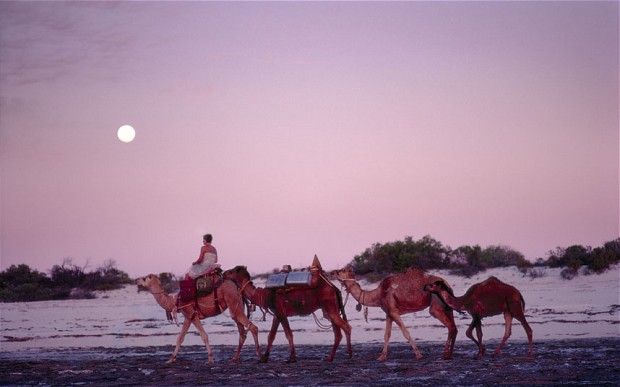
Tracks is the story of Robyn Davidson’s journey across 1,700 miles of Australian desert with four camels and a dog.

Probably not the most rational thing to do, but I think you have to be a little bit crazy to actually go out on your own and do this. Both had similar reasons for their journeys. Cheryl was quite forthright about her reasoning.

That in truth my hike on the Pacific Crest Trail hadn’t begun when I made the snap decision to do it. It had begun before I even imagined it, precisely four years, seven months and three days before when I’d stood in a little room at the Mayo Clinic in Rochester, Minnesota, and learned that my mother was going to die. Cheryl Strayed

For Robyn you need to read more deeply to get a sense of why she was compelled to do this.

What I wanted to do, which was to be alone, to test, to push, to unclog my brain of all its extraneous debris, not to be protected, to be stripped of all social crutches, not to be hampered by any outside interference whatsoever, well meant or not. Robyn Davidson

Interestingly Robyn’s mother had also died and, while she didn’t elaborate on her death, you got the sense that her mother’s passing had impacted her and her family as much as it had Cheryl’s.

The trip reinstated a faith in myself and what I was doing. I felt calm and positive and strong, and now, instead of the trip appearing out of character, instead of worrying about whether or not it was a pointless thing to do, I could see more clearly the reasons and the needs behind it. Robyn Davidson

Unsurprisingly there were quite a few similarities in both stories. Both women were escaping society to find themselves, they encountered danger along the way, had periods of madness and times when they were perfectly happy in their aloneness. And both realized they couldn’t escape society forever.

I was beginning to understand that being alone got awfully boring sometimes, and that I needed people, wanted them. Robyn Davidson

There were also differences. Much of this was due to the location of the journey, Australia and the US, and the women’s physical distance from civilization. And the timing. Cheryl’s journey took place in the 1990’s, Robyn’s in the 1970’s. While only 20 years apart much had changed in society. Technology and the perception of women in the community both made a difference to their stories.

As an Australian, I found Robyn’s interest in and connection with indigenous Australians fascinating.

I was caught between two versions of the truth. I liked station people and know that they did not consider themselves racist. When they look at the sordid camps around town, they see only violence and dirt and the incomprehensible lack of protestant work ethic. While they usually have a patronizing respect for the older Aboriginal people, they are unable to see beyond the immediate and beyond their own values, to understand why the demise occurred and what their part in it is, either traditionally or at present. Robyn Davidson

There was very little in Wild about native Americans.

Robyn was much more prepared for her journey having spent a significant amount of time in Alice Springs, mainly learning about camels and how to handle them. Given the isolation of where she was going and how she was traveling this was unsurprisingly essential to her survival.

Cheryl had just her backpack. Robyn had four camels, and the support of National Geographic and a photographer visiting her a number of times on the way.

My hands moved to it on instinct, seeming to bypass my brain. Monster was my world, my inanimate extra limb. Through its weight and size still confounded me, I’d come come to accept that it was my burden to bear. Cheryl Strayed

Wild

I enjoyed reading both books, in fact I have read them twice in the past 12 months and watched the movie version of Wild (and would like to see Tracks too).

At times while reading, I was frustrated by their decisions and wanted to tell them to be more logical and less impulsive. However, on reflection this is probably the reason why I would never seriously contemplate doing this myself. (Although, secretly I’d love to give it a go!)

Thank you, I thought over and over again. Thank you. Not just for the long walk, but for everything I could feel finally gathered up inside of me; for everything the trail had taught me and everything I couldn’t yet know, though I felt is somehow already contained within me. Cheryl Strayed

The two important things that I did learn were that you are as powerful and strong as you allow yourself to be, and that the most difficult part of any endeavour is taking the first step, making the decision. Robyn Davidson

Photo credits: Robyn Davidson – Rick Smolan, Cheryl Strayed – http://www.cherylstrayed.com

Wild: A Journey from Lost to Found, Cheryl Strayed, Atlantic Books, 2012,  E-book ISBN: 9780857897770

Tracks, Robyn Davidson, London, Bloomsbury, 2012, eISBN: 9781408834879


Finding my strength

Last weekend I ran the furthest I have run in ten years. 14 kilometres! And in two months time, if all goes to plan, I will be participating in a half marathon on the Great Wall of China.

Ten years is a long time between runs. Especially for something that, surprisingly, I quite like doing. Why has it taken me so long to get back into it? I’d like to say it is the lack of time. Working full time. Being a mum. Who has the time to train?

However, if I am being honest with myself it is more about mental strength. Having the willpower to muster up then energy to go for a run. Working full time, raising a child, it’s mentally exhausting.

I have found the same with cooking. Pre-sabbatical we would usually eat the same six or seven meals for dinner, not because I couldn’t be bothered to cook but because I didn’t have the energy to think about what to cook. Now that my mental energy is not being drained by work, I have the strength to plan and I am enjoying cooking and trying out new recipes.

Routines, of course, help. Having your running gear ready so that when you wake in the morning you can quickly get dressed and get out helps. Or preparing meals for the week on a Sunday and freezing them. However, this still requires mental energy and after a long week of last thing I want to do is spend half of my day cooking.

So, what’s the solution? I’m not sure yet. I am trying to create new habits (see previous blog). I am meditating which, while it takes time, is really helping me to focus on one task at a time rather than multiple ones. I’m also prioritising what is important to me and learning to say no more.

It’s all a part of the journey I am on …. I’ll let you know how I go in May when I run 21 kilometres.