Book Review: You Learn by Living by Eleanor Roosevelt

In the long run, we shape our lives and we shape ourselves. The process never ends until we die. And the choices we make are ultimately our own responsibility.

To continue my journey on reading books by women about their life and what they have learned from their experiences, I was recommended “You Learn by Living: Eleven Keys for a more Fulfilling Life” by Eleanor Roosevelt.

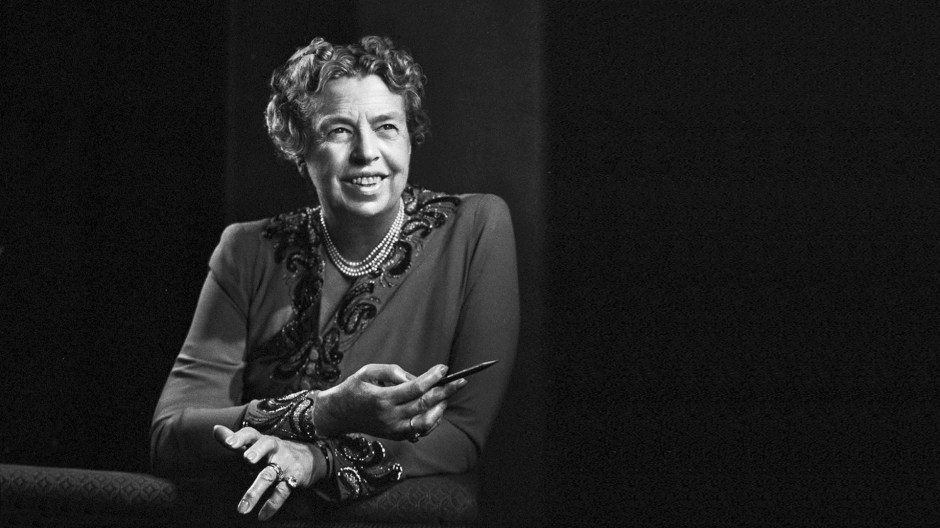
For those who don’t know Eleanor Roosevelt was the wife of Franklin Delano Roosevelt, the US President from 1933 until his death in 1945. Eleanor significantly redefined the role of First Lady by actively involving herself in the public sphere. Following her husband’s death she remained active in politics and served as the first Chair of the UN Commission on Human Rights. Eleanor was widely respected but was also often controversial for her outspokenness. She even occasionally publicly disagreed with her husband’s policies!

The biggest difference with the other books I have read recently was that this was written in 1960 – almost 60 years ago. While there are obvious differences in perspectives, much of what Eleanor writes about really does stand the test of time and remains true today.

Throughout the book, many instances reveal that the writing is very much a product of its time. Despite stepping beyond the role of a traditional housewife and becoming one of the few women actively involved in politics at the time, there is a sense in the book that Eleanor believes that a woman’s first role is to support her husband and children.

It has always seemed important to me that women should try to develop some interests in which their whole family can share. This is valuable all around. It intensifies family solidarity.

And when she discusses how a person can be involved in public life she always uses the male pronoun. She does however recognise that women are increasingly entering politics and gives a few words of advice.

I have been talking as though men were the only creatures to enter politics, but women are doing so increasingly, particularly in their own communities. They have some advantages and some disadvantages. They will generally find that men will tend to “keep them in their place.”

The references to Communist Russia and Eleanor’s concerns about their way of life are also an interesting read. In one chapter she encourages the reader to be an individual. “Its your life – but only if you make it so.” She then refers to conformity and Soviet training where from two months old babies go to an institute while their mother is at work. It is in this institute that the Russian child is trained to follow routines and punished if they do not.

However, much of Eleanor’s advice is as relevant today as it was in 1960. Some of the issues she discusses are so pertinent to the experiences of today that is it both frightening and amusing at the same time.

Here, perhaps, lies the key to our [the United States] growing failure to win friends abroad, though we have, in every other respect, richly earned that friendship, in money, material support, and human kindness that asks no return. We have failed only in enlightened understanding and tolerance – and respect.

Probably one of her most amusing comments was about how people can inform themselves about political issues.  (Although, I am sure that she didn’t intend it to be amusing.)

We must, for the most part, rely for much of our information on four main sources: the President of the United States, who is, or should be, the great educator of the people, bringing issues to them and explaining the situation…

Later on she refers to;

Sometimes, of course, the citizen discovers that he cannot rely on getting information from this source, even in matters that vitally concern his future and his welfare.

*chuckle* *chuckle*

Eleanor divides the book into eleven chapters, with each chapter a piece of advice on how to Learn by Living followed by examples of what she has learned in her life. I could relate to such much of her great pieces of advice that my Kindle version of the book  is full of yellow highlights.

  • Face your fears.

Courage is more exhilarating than fear and in the long run it is easier.

  • Use your time well.

Each of us has …. all the time there is. Those years, weeks, hours, are sands in the glass running swiftly away. To let them drift through our fingers is tragic waste. To use them to the hilt, making them count for something, is the beginning of wisdom.

  • Change is never-ending.

Every age, someone has said, is an undiscovered country. We are constantly advancing, like explorers, into the unknown, which makes life an adventure all the way.

  • Accept your responsibilities.

We are the sum total of the choices we have made.

For one thing we know beyond all doubt; Nothing has ever been achieved by the person who says, “It can’t be done.”

  • And, learn how to learn and continue learning throughout your life.

If you can develop this ability to see what you look at, to understand its meaning, to readjust your knowledge to this new information, you can continue to learn and to grow as long as you live and you’ll have a wonderful time doing it.

You Learn by Living: Eleven Keys for a More Fulfilling Life, Eleanor Roosevelt, New York, Harper, 1960, EPub Edition April 2011 ISBN: 9780062078506


Kicking the habit

I have been consciously focusing on habits recently. Creating new habits and moving some on.

We all have them, some good, some bad, some we are very aware of and some we don’t even realise.

Recently I became aware of one habit I had never noticed before. The Sunday evening blues. Those of you who go to school or work Monday to Friday might know the feeling. You’ve had two days off. And sometime around 5 or 6 pm on Sunday evening the thought creeps into your head. Ergh! Work tomorrow. Bam! The Sunday evening blues have arrived. I don’t know when they started, probably some time during my school years. Ergh! School tomorrow.

But then I remembered. I don’t have work to go to tomorrow. I’m on sabbatical. In fact, Monday is a day to celebrate. The rest of the people in my household are at school or work. I have time to myself. To write. To read. This is good.

I took some time to reflect on this… How often have I got myself into the spiral of negative thoughts by succumbing to the Sunday evening blues? How does this impact my attitude at work? My approach to life? How bad is this habit, that I wasn’t even aware of? This makes biting my nails pale in comparison.

This is one habit that was easy to kick and I will intentionally not pick it up again when I return to work.

I have been following Leo Babauta’s Zen Habits blog. He has some thought provoking ideas on how to make changes in your life.

He suggests making one tiny change at a time. How often have we woken up on January 1 and said OK I’m going to get fit this year? I’m going to lose weight and eat healthy. We go for a run, throw out the chocolate and wine and buy a shopping trolley full of fruit and veg. This lasts a week, a month or so. Then life gets in the way. You have to stay late at work a few nights. You have a big weekend of partying. The weather gets cold. And suddenly you have stopped running, and the cupboard is full of chocolate and wine. And you give up for another year.

Leo’s advice is to start with one small achievable action. Aim to walk twice a week, have wine free weekdays. Just one thing. It will be more achievable. And once you have successfully kicked one habit you are more likely to be successful the next time.

After all, habits such as the Sunday evening blues have likely been with you for a long time.

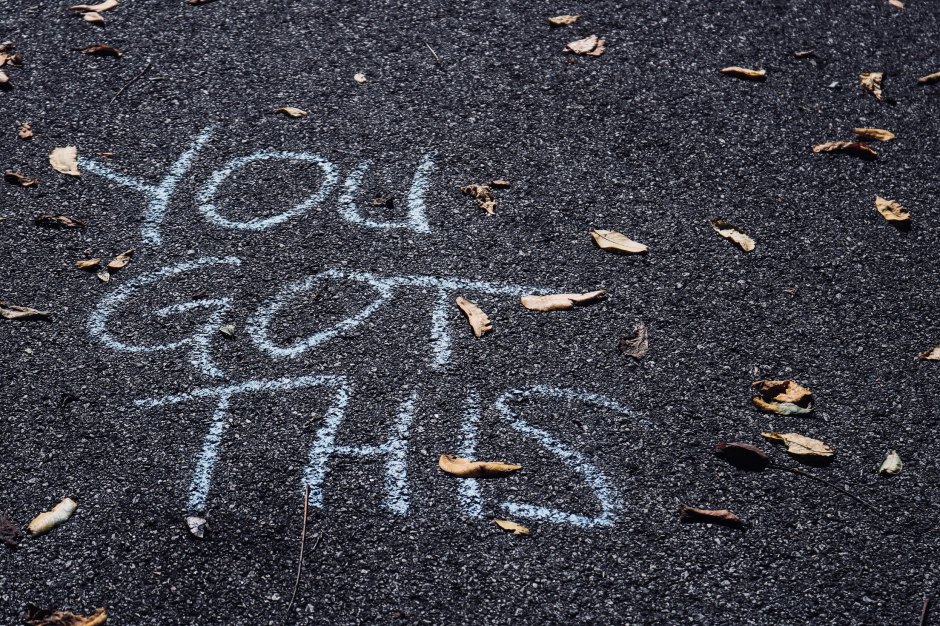
(Photo by sydney Rae on Unsplash)

Book Review: Year of Yes by Shonda Rhimes

The point of this whole Year of Yes project is to say yes to things that scare me, that challenge me. So in order to YES a problem, I have to find whatever it is inside the problem that challenges me or scares me or makes me just freak out – then I have to say yes to that thing.

Of all the books I have read in my year of exploration I have connected with Year of Yes: How to Dance It Out, Stand in the Sun and Be Your Own Person by Shonda Rhimes the most.

Oh my God! We could be twins. Shonda and I are the same age. Our birthdays are one day apart. We had the same love (obsession) with reading as we grew up. We’re from big families (five siblings). We both love writing. We both have somewhat unhealthy relationships with food. And almost everything she said in her book I could relate to.

Yes! Yes! YES! That is soooo me!

Can you see the family resemblance?

Shonda Rhimes

IMG_3388


Soul Sisters

It took Shonda a few home truths from her sister and the realization that if she’d been asked (instead of being told) she would have said no to an event where she sat next to the Obama’s. (Because it’s “scary”.)

Then she realized that to her shame, despite her envious job writing Grey’s Anatomy, Scandal and Private Practice, despite her three adorable children, despite her loving family and friends and to anyone looking from the outside her AWESOME, AMAZING life, she was, in fact, miserable.

Shonda commits to a year of saying yes.

Of course, Shonda being who she is, her first two yeses are:

  1. Giving the Commencement Speech at her university,
  2. Being interviewed by Jimmy Kimmel.

Scary!!!

This is it. It’s happening. And now that it is here, saying yes stops being just a vague idea. Now the reality of what I am embarking upon send my brain thundering around inside my skull.

Yes to everything scary.

Yes to everything that takes me out of my comfort zone.

Yes to everything that feels like it might be crazy.

Yes to everything that feels out of character.

Yes to everything that feels goofy.

Yes to everything.

Everything.

Say yes.

Yes.

What follows is a genuinely life changing year (and more) for Shonda.

I’m going to leave it to you to read the book and take from it what you will. I do, however, want to share a few quotes that had a huge impact on me.

I think that a lot of people dream. And while they are busy dreaming, the really happy people, the really successful people, the really interesting, powerful, engaged people? Are busy doing.

Don’t dream it. Do it. This is what my sabbatical year is about. Not just to Dream Beautiful but to Fly High.

Dreams are lovely. But they are just dreams. Fleeting, ephemeral. Pretty. But dreams do not come true just because you dream them. It’s hard work that makes things happen. It’s hard work that creates change.

Being a mother isn’t a job.

It’s who someone is.

It’s who I am.

You can quit a job. I can’t quit being a mother. I’m a mother forever. Mothers are never off the clock, mothers are never on vacation. Being a mother redefines us, reinvents us, destroys and rebuilds us. Being a mother brings us face-to-face with ourselves as children, with our mothers as human beings, with our darkest fears of who we really are. Being a mother requires us to get it together or risk messing up another person forever.

Absolutely. Yes! Yes! YES!

But only if you decide that YOU are going to do the work to make the programs work. Meaning, that nothing works if you don’t actually decide that you are really and truly ready to do it.

(Shonda is referring to losing weight but it can apply to anything really.)

This year I have set myself some big challenges …. learning Chinese, losing weight, running a half marathon, and more. All of these require commitment to make them work. Monthly, weekly, daily, hourly commitment.

Six months in and I am doing well on some of the challenges I have set myself. Some not so well. And some have gone by the wayside (like writing in my journal every day). But that’s OK. These are commitments to myself. To make me a better person for me. And while I may not achieve everything I set out to do, I have (and I will) become me.

The Year of Yes, I realize, has become a snowball rolling down a hill. Each yes rolls into the next and the snowball is growing and growing. Every yes changes something in me. Every yes is a bit transformative. Every yes sparks some new phase in evolution.

Year of Yes: How to Dance It Out, Stand in the Sun and Be Your Own Person, Shonda Rhimes, London, Simon & Schuster UK, 2015, Ebook ISBN 978-1-4711-5733-2


How to be inspirational

I have been lucky to have some inspirational people come into my life just at a time when I needed them most.

Their support and mentoring have helped me to become who I am today.

When I was 21 years old, I was fresh out of university, living in a big city for the first time, and had just landed my first real job. My boss, Susan, opened my eyes to a life beyond my conservative rural Australian upbringing. She was the first women I knew who had a career other than teaching. She was married but hadn’t taken her husband’s surname and they had deliberately chosen not to have children. But she was caring and passionate, she was sensible and practical. Not at all like the “career women” I previously knew through stereotypes on 80’s television shows. Susan took an interest in developing me, she taught me the fundamentals of marketing and where there were gaps found the best professional development courses for me. She even became my de-facto big sister, making sure I was safe in the big city much to my parents relief.

Later in my career I found myself in my first leadership position. Again I had a boss who was similar to my first – caring, passionate, practical – but now I needed to learn about leadership. Belinda had the amazing ability to listen to all sides with a open mind and see a pathway ahead. She showed me how to have courageous conversations with difficult people and encouraged me to solve issues myself. Her confidence in my knowledge and experience emboldened me to be confident in my own abilities, which in turn made me a better leader.

People who inspire you go beyond simply teaching or mentoring. They go beyond the day to day. They have a deep impact on your whole life, professionally and personally.

Recently I have been reflecting on how I can pass this gift on by inspiring others. How can I be inspirational for others? Following are some challenges I have set myself:

  1. Have courage and stand up for what I believe in.

  2. Be authentic and comfortable with who I am.

  3. Be passionate and share that enthusiasm with others.

  4. Care about seeing others grow and improve. Challenge them to be their best.

  5. Lead by example. Walk the talk!

Inspirational people come into your life when you most need them. (But perhaps not always when you are looking.) And sometimes it isn’t immediately obvious that they are there to inspire you. It is only afterwards, when you have had time to reflect, that you realize how much this person has had an impact on you.

Thank you to those who have inspired me.


Book Review: Full Circle: A memoir of leaning in too far and the journey back by Erin Callan Montella

“Knowing your story means living a considered life. Socrates had it right. An unexamined life is not really worth living. Maybe that’s a bit extreme, but without self-reflection, we never learn from our mistakes, condemned to repeat the same pattern over and over.”

This book has been on my reading list for some time. I was drawn to it again when I was searching for books related to my own journey: women seeking to understand their world, taking a break from the work treadmill to reflect on their purpose in life.

Erin Callan Montella’s decision to take time off from work was not fully her own. She was the chief financial officer at Lehman Brothers in 2008 just before it spectacularly collapsed and played a part in kicking off the Global Financial Crisis.

This memoir recounts her journey from a young girl to one of the highest ranking people on Wall Street and how her career became her life.

Erin is an incredibly intelligent, brilliant and driven woman. Her ambition led her to take well thought out risks, to reach a position that no (few?) other women had achieved. While the cracks were already appearing before her resignation (sacking?) from Lehman Brothers it was this event and its aftermath that forced Erin to reflect on her life.

“…. a successful professional athlete who referred to the sport he played as his platform, not his purpose. A jumping off point to accomplish bigger and better things. The things that mattered more in life. The simple idea that a career could be a platform, not a purpose, was like a slap across the face. The good kind. A wake-up call. I had done the opposite, making a successful career my purpose, not a platform for something more meaningful.”

While reading Full Circle I wondered what would have happened if this situation had not been forced upon Erin. Would she have had the self awareness to recognise and acknowledge the pathway she was on was not the meaningful purpose she was seeking?

Needless to say she found her career in tatters, her emotional well-being reaching the darkest imaginable. She needed time to reflect and readjust to a new life and a new way of doing things.

Erin only briefly writes about her new life as a wife and mother, which makes me wonder where this journey has taken her? What is she doing now (she mentions at the start of the book that she is retired) and more importantly what lessons has she taken into her new life? Did she find the balance that was so lacking in her old life? Or has she simply pursued the exact opposite pathway?

While I am a long way from a high ranking career woman and never want to be, I still gained much from Erin’s memoir. To take time for self reflection. To consider what is meaningful to me. Many of her words inspire me as I reflect on my life, it’s purpose and what I am going to do next.

“Because figuring out what really matters to you and how it dictates the direction of your time, your energy, your passion is always at the heart of the matter.”

Full Circle: A Memoir of Leaning in Too Far and the Journey Back, Eing Callan Montella, Sanibel, Florida, 2016, Kindle Edition, ISBN 978-0-9973821-2-9 (e-book)


Life lessons learned while living as an expat

It is my seventh year of living in China as an expat. I sometimes find it hard to believe that I am even living in China, let alone it being seven years.

It has been said that I am not living in the real world. And at times it can feel like it. However, in this time I have learned some important life lessons.

Value what you have today

Nature, fresh air and blue skies. Living in Australia I took these things for granted. They were ever present. I didn’t even really give them much thought. Until they were no longer a daily part of my life. Now they are something to be appreciated and thankful for.  Just looking up and seeing clearly defined clouds now brings me joy.

It is easy to fixate on the things I don’t have. Doing this day in, day out made my life miserable. (I have SO been there, especially in the first year living here.) I now try to take a moment every day to reflect on what I do have and be thankful for every experience.

Ensure you make time for your loved ones

Shortly after I arrived here my grandfather passed away. I wasn’t able to make it to his funeral. I have missed family birthdays, christenings and many Sunday roast dinners. For a while I focused on all the things I was missing out on.

I now ensure I make time to visit or speak with loved ones. My goal is to spend quality time rather than quantity. (Christmas is good time as many people are on holidays and are also in more relaxed frame of mind.) Even a chat on Skype can make the world of difference.

And not forgetting my new friends, who in an expat community become my de facto family. They too are added to the list of loved ones I make sure I have time for.

Question your assumptions

One huge thing that has really turned my life upside down while living in China is realising how many of my assumptions are based on my cultural expectations.

Some things that at first appeared crazy began to make sense once I got to understand the Chinese culture and the reasons behind it. One of my first experiences in China was taking my two year old son to a playground which had a sand pit. He immediately sat down in the sand to play, as any child would. Well, a Western child that is. As the grandmothers and ayi’s were frowning, tutting and shaking their heads at me, I noticed all the Chinese children were squatting to play in the sand. I later learned that sitting in the sand was viewed as dirty and unclean. Of course, at the time all I could see was the countless bottoms and willies hanging out the split pants the young children were wearing, and being totally grossed out by that.

Be flexible, patient and open minded

For those who know me, I am a bit of an organiser.  I like things to go to plan. I can get more than a little stressed when things are out of my control. However, living in a foreign country, especially one with a culture that is so different to my own, has taught me that things will often not work out how I want them to.

It took me a while, but I have now realised that I can’t always make things work out the way I want. Losing my patience or being inflexible is not going to change the situation. And, more importantly, I am the one who is going to suffer if I don’t change my attitude.

Now I am a lot more relaxed about things. I ask myself “Can I change this situation?” and if I can’t I then ask “Can I change my attitude?”

When we decided to move to China I expected adventure, awesome experiences and the chance to get to know a new culture. What I did not expect was to learn some very valuable lessons that will stay with me for life.


Book Review: Eat Pray Love by Elizabeth Gilbert

In taking my own sabbatical, I have become interested in other women’s experiences of taking a break from work.

I have to admit I wasn’t really interested in reading Elizabeth Gilbert’s Eat Pray Love when it was first published and was even less so when the Hollywood movie was released. I probably dismissed it as the self-indulgent musings of a person of privileged means, if I even thought of it at all.

However, as I was reading Reboot Your Life it was one of the suggested readings. So in the interests of research I thought I would take a look.

Eat Pray Love is the memoir of a woman who, having gone through a bitter divorce and an ill-fated love affair, decides to go in search of pleasure (in Italy), devotion (in India) and balance (in Indonesia).

While I am not so fortunate as to be able to spend all my sabbatical traveling the world, the themes of pleasure, devotion and balance really resonated with me and my journey.

For pleasure Elizabeth went to Italy. After all, what greater pleasure is there than food?

Her time in Italy was what the authors of Reboot Your Life call the reconnecting phase; a time to revitalize connections to people, places, activities and yourself. It would be easy to focus on Elizabeth’s positive, pleasurable experiences; learning to speak Italian, eating, making friends. But it wasn’t always easy as she left behind the issues and worries of her previous life. It was in this section that I found my favourite quote in the book;

“Never forget that once upon a time, in an unguarded moment, you recognised yourself as a friend.”

For Elizabeth, pleasure was about finding herself again, perhaps even finding an element of happiness.

For me finding myself is about just being me, being true to myself, to be real. In my work life I have tended to adapt to the image of the company I was representing. In marketing an organisation I have adopted the company brand. Sometimes that has been easy and the organisation’s brand is some part of who I already am. Sometimes I have had to create a new image of myself. Now that I am not working, I don’t have to pretend to be something I am not, even a little bit. I am me. And it feels good, even pleasurable.

In seeking devotion, Elizabeth travelles to India and spends time in an ashram. Nearing the end of her stay she finds a connection with God. “I am suddenly transported through the portal of the universe and taken to the centre of God’s palm.” Another time she recalls feeling a ‘soft blue electrical energy’ and discusses how this energy has been described by devotees of many different religions.

This got me thinking. Christians, Muslims, Hindus, Buddhists….. aren’t we all really seeking the same thing? Although I was bought up in a Christian culture and am now living in one based in Confucianism I have tended to avoid religion. The negative aspects of patriarchy, war, greed and sexual abuse have kept me away. But what if there is something deeper?  I am now exploring my spirituality and learning more about the different world religions. (Perhaps a blog post for another time?)

Finally, Elizabeth travels to Bali seeking balance. She travels there on an invitation from a Balinese medicine man with almost no research or preparation. She doesn’t have a place to live, she doesn’t know anyone and when she arrives she finds out that the Indonesian visa rules only allow for a one month tourist visa when she had be planning to stay three to four months. (Something that totally freaks my compulsive planner and organizer self out!) However, within weeks the balance naturally falls into place.

“I can feel my own peace, and I love the swing of my days between easeful devotional practices and pleasures of beautiful landscape, dear friends and good food.”

For me, in seeking balance in my life I am trying to find that harmony between having a planned daily routine and taking each day and hour as it comes. To be open to opportunities as they arise and say “Yes!” without over thinking it.

In summary, despite my initial hesitation I enjoyed the book. I stand by my initial thoughts that her experience is somewhat self-indulgent and only possible for those with a privileged life. And the ending seemed to wrap up a bit too neatly. (Hello, Hollywood ending!) However, my take away was that her quest to find peace and happiness took her by surprise. Perhaps I can’t plan for this. I can try seeking it but there is no guarantee I will find it. The important thing is to be open to the possibility.

Eat Pray Love, Elizabeth Gilbert, London, Bloomsbury Publishing Plc, 2006, eISBN 978 1 4088 0866 5


Why I am learning Chinese

Why am I learning Chinese? I have asked this question myself a number of times, usually when I am sitting in class trying to understand the grammatical structure of a Chinese sentence.

I have been living in China for six years and surprisingly I have been able to survive with virtually no Chinese language skills. I have what I call Taxi Chinese. I can get in a taxi and get to where I need with the basic words left, right, turn around and stop. I can go to a shop, point and say one, two, or three of those, thank you.

However, I always have a sense that I am missing out. Missing out on having a richer and more meaningful experience of living in a foreign (and non-English speaking) country. Missing out on understanding the cultural nuances of a country that only comes with understanding their language. Missing out of opportunities and experiences because I can not communicate with the people around me.

I am also jealous. I live in a community with people from over 50 countries. Almost everyone I know is bilingual, many are multilingual. I watch and listen to my friends converse in one language and seamlessly move to another. I cannot describe the feeling of inadequacy when you realise your son’s 5 year old friend can speak four languages. (Japanese from his mother, French from his father, English, the language he speaks at school and Chinese the “second” language he learns at school.)

And I also feel guilty. My son has been formally learning Chinese since he was three and informally from the moment I left him in the hands of his Ayi (the wonderful woman who cared for him) while I went to work. How can I in good conscience ask my child to do his Chinese homework, explaining how important it is to learn the language of the country we live in, while not even making an effort to learn the language myself?

There is oodles of research out there about the benefits of learning a foreign language. And not just kids. Older people too.

You get smarter!!! Research from North Western University found speaking more than one language constantly exercises the brain and makes it more prepared to take on other brain-challenging tasks.

It could prevent Alzheimer’s and Dementia. A study of seniors with varying forms of dementia and literacy were evaluated and led researchers to conclude that those participants who spoke a second language were able to delay Alzheimer’s Disease, vascular dementia, and frontotemporal dementia by 4.5 years.

And your English will improve too! Focusing on the mechanics of language e.g. grammar, conjugations, and sentence structure makes you more aware of language, and the ways it can be structured and manipulated. These skills can make you a more effective communicator and a sharper editor and writer.

So, here I am two afternoons a week sitting in class learning how to where I am from. “Wo shi Aodaliya ren.” Learning how to buy 1.5 kg of apples. “Wo mai pingguo. Duoshao qian san jin. ?” And complaining that the price is too expensive and asking for a cheaper price. “Tai gui le! Pianyi yi dianr, xing ma?”

Surprisingly after six years I know more words than I thought I did. The challenge is understanding what order the words go in so I don’t sound like a complete idiot.

My goal by the end of this sabbatical is to be able to go out for dinner with my Chinese friends and speak with them in their language rather than forcing them to converse in mine.

Book Review: Reboot Your Life: Energize Your Career and Life by Taking a Break, Catherine Allen, et al

Carry me away. Let the tide take me where it will. Let’s see how long it takes to figure out my next career step.


I thought for my first blog post I’d review the book that really clarified my thinking on what I was trying to achieve in taking a year off work.

In taking a 12 month break from paid work I knew I didn’t want to spend it sitting around watching TV, having long boozy lunches and getting pedicures and massages. (Although it would be OK to do that some of the time.)

I wanted this time to be meaningful, to have purpose, to be structured.

Like most people these days I went straight to Google for the answers.

Reboot Your Life: Energize Your Career and Life by Taking a Break by Catherine Allen, Nancy Bearg, Rita Foley, and Jaye Smith helped find these answers.

Reboot Your Life is an easy to follow guide to how and why taking a break from work can help people to re-examine their priorities and re-energise their lives. Written by four women who have taken sabbaticals and drawing on the experiences hundreds of others Reboot Your Life is a book you can read from cover to cover or just dip into the chapters that you need.

Reboot Your Life talks about the reasons for and benefits of taking a career break, how you can fund your time away, the heart of a sabbatical – reconnecting with yourself and your world and exploring opportunities, re-entering the workplace and living a lifelong sabbatical.

It is somewhat targeted at mid-career Americans and some of the advice is not really relevant to those of us from the rest of the world or those starting or part-way in their careers. However, in saying that there enough guidance for people to take something away.

The decision to take a sabbatical – to answer that call to oneself – is a huge step. There’s no question about it. The worries that can cloud people’s minds and tighten their guts as they contemplate taking a break are real and practically universal. At the same time, sabbaticals are as old as time and are a natural rhythm of life. Knowing that and learning a little more about sabbaticals – like their cultural context and great outcomes – may make it easier to decide to take one.


Reboot Your Life: Energize Your Career and Life by Taking a Break, Catherine Allen, Nancy Bearg, Rita Foley, Jaye Smith, New York, Beaufort Books, 2011, First edition, ISBN 978-0-8253-0564-1